


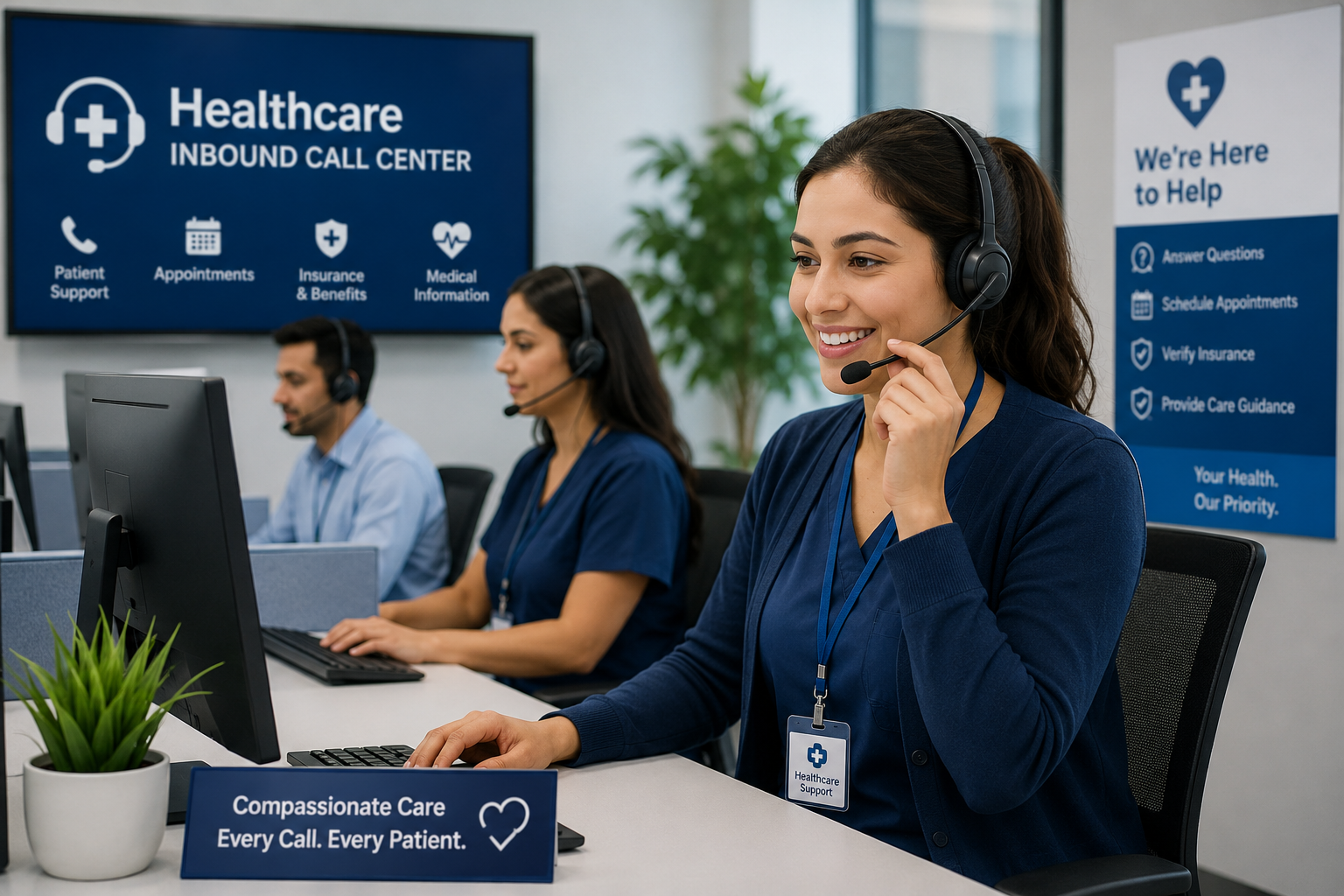
Large clinics often handle hundreds of inbound calls daily—from appointment requests and billing questions to urgent medical inquiries and insurance verifications. Missing even a small percentage of these calls can lead to lost appointments, frustrated patients, and significant revenue leakage. A robust healthcare inbound call center serves as the vital frontline, ensuring every call is answered promptly, securely, and effectively.
A healthcare inbound call center is a specialized system designed to manage incoming patient communications for medical practices. For large clinics with high volumes and complex needs, it goes far beyond basic answering services. The best healthcare inbound call center features integrate advanced technology, strict compliance, and patient-centric tools to boost efficiency, satisfaction, and revenue.
Why Large Clinics Need a Dedicated Inbound Healthcare Call Center
Large clinics face unique challenges that generic phone systems or small-team receptionists cannot handle effectively:
- High call volume: Clinics may receive hundreds of calls daily, with peaks during business hours.
- Complex inquiries: Patients call about appointments, billing, insurance verification, test results, and referrals.
- HIPAA and compliance risks: Mishandling protected health information (PHI) can result in severe penalties.
- After-hours demands: Patients need support outside regular hours for urgent issues.
- Scalability issues: Seasonal fluctuations or growth can overwhelm in-house staff.
A dedicated inbound healthcare call center addresses these by providing reduced wait times, higher first-call resolution rates, and better patient satisfaction. It also offers scalability without proportional increases in overhead. Studies show that optimized call handling can significantly lower abandonment rates and recover revenue from missed appointments.
Inbound call center for healthcare solutions help large clinics maintain a professional, empathetic, and compliant patient experience while freeing clinical staff for care delivery.
Top Features of the Best Healthcare Inbound Call Center
The best healthcare inbound call center solutions stand out through sophisticated features tailored to large clinic demands. Here are the most impactful ones:
Intelligent Call Routing and IVR Systems
Advanced Automatic Call Distribution (ACD) and skill-based routing direct calls to the right agents based on expertise, availability, or urgency (e.g., routing emergencies differently from routine scheduling). Customizable Interactive Voice Response (IVR) menus allow patients to self-select options like “Schedule Appointment,” “Billing Inquiry,” or “Speak to a Nurse.”
Benefits for large clinics: Dramatically reduces hold times, lowers transfer rates, and improves first-call resolution. IVR can handle routine queries, freeing agents for complex issues.
Seamless EHR/EMR and CRM Integration
Real-time access to patient records via integration with systems like Epic, athenahealth, or Cerner enables agents to view history, verify insurance, and schedule appointments without switching applications.
Benefits: Reduces errors, speeds up interactions, and personalizes service. Agents can update records instantly, improving care coordination and minimizing duplicate efforts.
HIPAA Compliance and Security Features
Essential features include encrypted call recording (with consent), secure data transmission, role-based access controls, audit trails, and Business Associate Agreements (BAAs). Calls involving PHI must be handled in compliant environments.
Benefits for large clinics: Mitigates legal risks, builds patient trust, and ensures all interactions meet federal standards—critical for multi-location or high-volume operations.
AI-Powered Analytics and Reporting
AI tools provide call transcripts, sentiment analysis, performance metrics (average handle time, resolution rates, wait times), and predictive insights for staffing and process improvements.
Benefits: Data-driven decisions optimize operations, identify training needs, and enhance patient experience through real-time coaching.
Omnichannel Support (Voice, Chat, Email, SMS)
A unified platform lets patients interact via their preferred channel while maintaining a consistent history and context across voice, web chat, email, and text.
Benefits: Creates a seamless inbound healthcare call center experience, meeting modern patient expectations and improving accessibility.
24/7 Availability and After-Hours Handling
AI agents or scalable staffing models ensure round-the-clock support for scheduling, refills, or urgent triage.
Benefits: Captures calls that would otherwise go unanswered, reduces missed opportunities, and supports patients in different time zones or with non-traditional schedules.
Appointment Scheduling and Patient Self-Service Tools
Automated booking, real-time availability sync, confirmation reminders, and pre-arrival verification via IVR or apps.
Benefits: Boosts show-up rates (reducing no-shows by up to 30% in some cases) and streamlines administrative workflows.
Quality Monitoring, Training, and Agent Tools
Real-time call monitoring, AI-assisted coaching, recorded call reviews, and knowledge bases empower agents to deliver empathetic, accurate service.
Benefits: Higher agent performance, consistent quality, and continuous improvement.
How These Features Drive Results for Large Clinics
Implementing advanced features in a healthcare inbound call center yields measurable outcomes:
- Revenue recovery: Reduced missed calls and better scheduling can recapture significant appointment revenue. One analysis showed practices losing tens to hundreds of thousands annually from missed interactions.
- Efficiency gains: Internal centralized models have demonstrated faster answer times, shorter handle times, and lower operating costs compared to outsourced options.
- Patient satisfaction: Higher first-call resolution and omnichannel options improve NPS and retention.
- Compliance and risk reduction: Built-in security protects against breaches and penalties.
Comparison Table: Basic vs. Advanced Healthcare Inbound Call Center
| Feature | Basic Setup | Advanced (Best) Features | Impact on Large Clinics |
|---|---|---|---|
| Call Routing | Manual or simple IVR | AI/Skill-based ACD + Intelligent IVR | Faster resolution, fewer transfers |
| EHR Integration | Limited or none | Real-time Epic/athenahealth sync | Reduced errors, personalized care |
| Compliance | Basic privacy | Full HIPAA with encryption & audits | Risk mitigation |
| Analytics | Basic reporting | AI sentiment & predictive insights | Data-driven optimization |
| Availability | Business hours | 24/7 with AI agents | Captured after-hours revenue |
| Omnichannel | Voice only | Voice + Chat + SMS + Email | Modern patient experience |
Implementing a Healthcare Inbound Call Center: Best Practices
- Choose the right software/providers: Prioritize HIPAA-compliant platforms with strong EHR integrations, scalability, and proven healthcare experience.
- Train staff thoroughly: Focus on compliance, empathy, medical knowledge, and system proficiency.
- Measure success with KPIs: Track average speed of answer, handle time, first-call resolution, abandonment rate, patient satisfaction (NPS), and revenue metrics.
- Avoid common pitfalls: Underestimating integration needs, neglecting ongoing training, or choosing non-scalable solutions.
Conclusion
The best healthcare inbound call center features—intelligent routing, EHR integration, HIPAA security, AI analytics, omnichannel support, 24/7 availability, self-service tools, and quality monitoring—empower large clinics to deliver exceptional patient experiences while optimizing operations and revenue.
For large clinics struggling with call volume and complexity, investing in an advanced inbound healthcare call center is no longer optional—it’s a strategic advantage. These solutions reduce costs, enhance compliance, and most importantly, improve patient outcomes.
Ready to upgrade your clinic’s patient communication? Contact us for a demo of the best healthcare inbound call center solutions tailored for large practices.
FAQ
What is a healthcare inbound call center?
It is a specialized team and technology platform that manages all incoming patient calls and communications for medical practices, focusing on scheduling, inquiries, and support.
How does EHR integration work in an inbound healthcare call center?
Agents access and update patient records in real-time within their call-handling interface, enabling faster, more accurate service without toggling between systems.
Why is HIPAA compliance critical for large clinics?
It protects patient privacy, avoids massive fines, and maintains trust in high-volume environments handling sensitive data.
Can AI handle appointment scheduling in healthcare?
Yes—modern AI agents manage booking, reminders, and verification with high accuracy while escalating complex cases to live agents.
What results can large clinics expect?
Improved efficiency, higher patient satisfaction, reduced no-shows, and substantial revenue gains through better call capture and retention.