


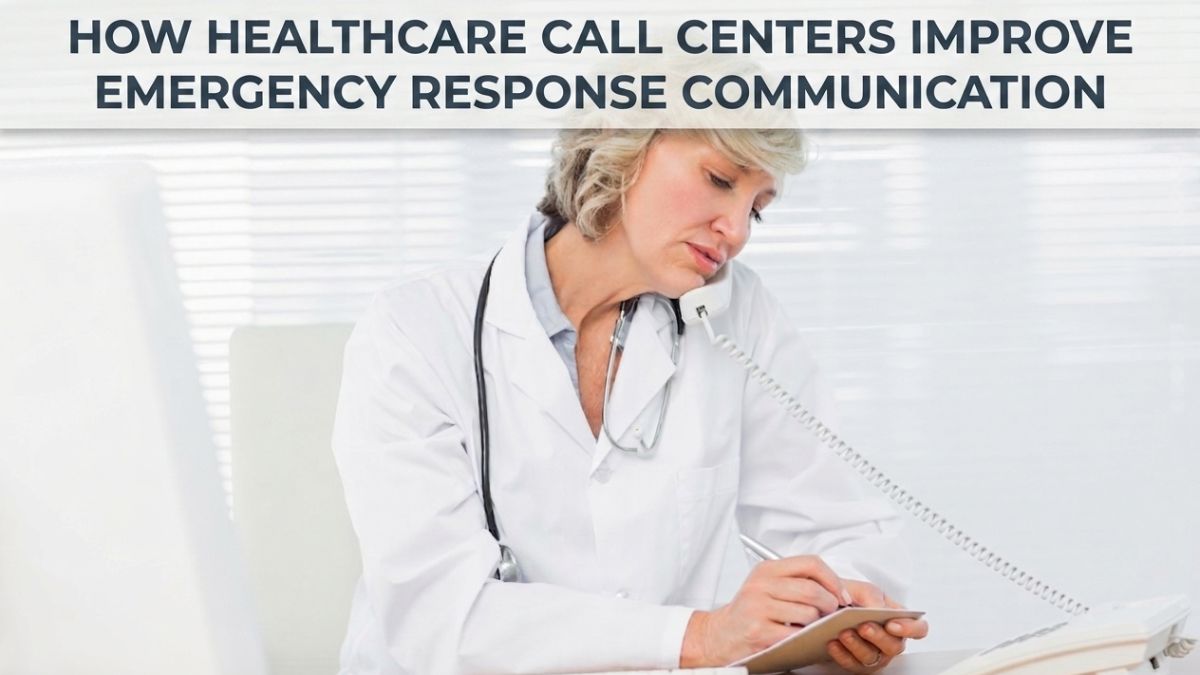
Medical emergencies demand fast action, clear communication, and accurate coordination. However, hospitals, urgent care centers, and emergency departments often struggle with delayed patient routing, overloaded phone lines, and fragmented communication systems. A modern Healthcare call center helps solve these challenges by streamlining emergency communication between patients, dispatch teams, healthcare providers, and support staff.
Today, healthcare organizations across the United States rely on centralized communication systems to reduce response delays and improve patient outcomes. According to the CDC, nearly 130 million emergency department visits occur annually in the US. As patient demand grows, healthcare providers need faster and more organized communication workflows. Therefore, healthcare systems increasingly invest in structured emergency communication operations to maintain care continuity.
Moreover, many providers now use Healthcare call center services to support emergency triage coordination, appointment prioritization, nurse communication, and patient routing. These systems help hospitals reduce confusion during peak patient demand while improving operational responsiveness.
Why Emergency Response Communication Matters in Healthcare
Emergency communication directly impacts patient safety. Even small delays can affect treatment outcomes during cardiac emergencies, trauma incidents, stroke cases, or respiratory distress situations.
Healthcare organizations must coordinate multiple teams simultaneously, including:
- Emergency physicians
- Nurses
- Ambulance dispatchers
- Laboratory teams
- Imaging departments
- Patient family support teams
- Administrative coordinators
Without a centralized communication process, critical information often becomes delayed or fragmented.
Key Communication Challenges Healthcare Facilities Face
| Challenge | Impact on Emergency Response |
|---|---|
| High inbound call volume | Delayed patient assistance |
| Misrouted emergency calls | Slower treatment coordination |
| Lack of triage prioritization | Increased operational confusion |
| Inconsistent patient updates | Reduced patient trust |
| Communication gaps between departments | Care delays |
According to the Agency for Healthcare Research and Quality, communication failures contribute to nearly 70% of serious medical errors in hospital settings.
How Does a Healthcare Call Center Improve Emergency Coordination?
A Healthcare call center acts as a centralized communication hub. It manages incoming calls, patient escalation, emergency routing, and real-time coordination between medical teams.
Instead of relying on disconnected front-desk systems, healthcare facilities can centralize emergency communication workflows.
Faster Emergency Call Routing
Emergency situations require immediate escalation. Call center systems use intelligent routing protocols to direct urgent calls to the correct department without unnecessary transfers.
For example:
- Chest pain calls route directly to emergency triage nurses
- Stroke symptom reports receive immediate escalation
- High-risk patient calls trigger rapid response workflows
As a result, hospitals reduce response bottlenecks significantly.
Real-Time Coordination Between Departments
Emergency care often involves several departments simultaneously. A centralized communication model helps synchronize information quickly.
This process supports:
- Faster lab coordination
- Immediate radiology notifications
- Real-time physician communication
- Efficient bed management
- Better ambulance intake preparation
Consequently, patient treatment begins faster after arrival.
Why Are Healthcare Providers Moving Toward Centralized Communication Systems?
Healthcare systems across the US increasingly adopt centralized operations because emergency demand continues rising.
The American Hospital Association reports that emergency department overcrowding remains one of the largest operational challenges for hospitals nationwide.
Benefits of Centralized Emergency Communication
| Operational Benefit | Outcome |
|---|---|
| Unified communication system | Reduced confusion |
| Standardized escalation workflows | Faster emergency response |
| Better patient tracking | Improved continuity of care |
| Reduced administrative burden | More staff efficiency |
| Streamlined patient transfers | Lower wait times |
Additionally, centralized systems improve documentation accuracy and compliance reporting.
How Healthcare Call Centers Support Emergency Triage
Emergency triage determines how quickly patients receive care based on symptom severity. Efficient triage communication improves patient prioritization significantly.
Nurse Triage Support
Many emergency communication centers support nurse triage operations by collecting symptom details before escalation.
Common triage support tasks include:
- Assessing symptom urgency
- Identifying high-risk conditions
- Prioritizing emergency callbacks
- Directing patients to appropriate care settings
This structured workflow improves decision-making during high-pressure situations.
Reducing Emergency Department Overload
Not every urgent patient requires emergency room treatment. Some patients need urgent care, telehealth support, or same-day physician consultations instead.
Therefore, call center coordination helps healthcare providers direct patients appropriately.
According to the Centers for Medicare & Medicaid Services, avoidable emergency department visits remain a major operational concern across US healthcare systems.
What Technologies Improve Emergency Response Communication?
Technology now plays a critical role in emergency communication efficiency.
Healthcare organizations increasingly integrate advanced communication systems into their operational infrastructure.
Essential Technologies Used in Emergency Communication
| Technology | Purpose |
|---|---|
| Cloud-based communication systems | Improve scalability |
| AI-powered call routing | Prioritize urgent cases |
| Electronic Health Record integration | Faster patient data access |
| Omnichannel communication | Better patient accessibility |
| Real-time analytics dashboards | Operational visibility |
Furthermore, healthcare providers use automated alerts and workflow triggers to reduce communication delays.
How Do Healthcare Call Centers Improve Patient Experience During Emergencies?
Patients and families often experience anxiety during emergencies. Clear communication reduces uncertainty and builds trust.
Faster Patient Updates
Emergency communication teams provide:
- Treatment status updates
- Admission notifications
- Transfer coordination information
- Follow-up communication
- Family assistance support
As a result, patients feel more informed throughout the care process.
Reducing Patient Frustration
Long wait times and unanswered calls create negative healthcare experiences. Efficient communication workflows help reduce confusion significantly.
A recent Press Ganey healthcare survey found that communication quality remains one of the strongest predictors of patient satisfaction scores in US hospitals.
Real-World Example of Emergency Communication Improvement
A regional hospital network in Texas implemented centralized emergency communication workflows after experiencing severe emergency room congestion.
The organization introduced:
- Intelligent emergency call routing
- Centralized nurse triage support
- Integrated patient communication dashboards
- Automated escalation alerts
Within one year, the network reported:
| Improvement Area | Reported Outcome |
|---|---|
| Emergency call response speed | Improved significantly |
| Internal coordination delays | Reduced |
| Patient transfer efficiency | Increased |
| Staff communication accuracy | Improved |
| Patient satisfaction scores | Increased |
Healthcare organizations increasingly follow similar communication modernization strategies to improve emergency responsiveness.
How Healthcare Call Center Services Strengthen Disaster Response
Natural disasters, disease outbreaks, and public health emergencies place enormous pressure on healthcare communication systems.
During emergencies, providers must manage:
- High patient call volumes
- Resource allocation updates
- Public health communication
- Emergency scheduling changes
- Crisis escalation procedures
Healthcare call center services help healthcare organizations maintain communication continuity during these high-pressure events.
For example, during the COVID-19 pandemic, healthcare communication centers supported:
- Vaccine scheduling coordination
- Symptom screening operations
- Emergency hotline management
- Telehealth communication support
The US Department of Health & Human Services emphasized centralized communication as a critical public health response strategy during national emergencies.
For additional information about emergency healthcare systems, readers can explore the official US government resource on <a href=”https://www.ready.gov/” target=”_blank” rel=”noopener”>emergency preparedness and response</a>.
What Features Should Healthcare Organizations Prioritize?
Healthcare providers should evaluate emergency communication systems carefully before implementation.
Important Features to Consider
24/7 Communication Availability
Emergency communication never stops. Continuous support remains essential.
HIPAA-Compliant Communication Systems
Patient privacy protection remains critical during emergency communication workflows.
Multilingual Patient Support
US healthcare systems serve diverse patient populations. Multilingual communication improves accessibility.
Data Integration Capabilities
Integrated systems improve coordination between departments and reduce duplicate communication.
Workforce Scalability
Healthcare providers need scalable communication operations during patient surges.
Why Emergency Communication Efficiency Impacts Long-Term Healthcare Performance
Emergency communication affects more than immediate patient outcomes. It also influences operational performance, patient retention, staff productivity, and healthcare reputation.
Organizations with efficient emergency coordination often experience:
- Better patient trust
- Reduced communication errors
- Improved provider collaboration
- Faster care delivery
- Higher operational resilience
Additionally, healthcare systems that modernize communication infrastructure adapt faster during public health emergencies.
Healthcare call center services continue evolving as providers prioritize digital transformation and patient-centered communication strategies.
Conclusion
Emergency response communication remains one of the most important operational functions in modern healthcare. Delayed communication can increase risks, reduce patient confidence, and slow treatment coordination. Therefore, healthcare organizations increasingly depend on centralized communication systems to improve emergency responsiveness.
A Healthcare call center helps providers streamline patient routing, support triage operations, coordinate departments, and improve communication accuracy during emergencies. Moreover, modern communication technologies now allow healthcare systems to respond faster while maintaining patient-centered support.
As emergency demand continues rising across the United States, healthcare organizations that strengthen communication infrastructure will improve both operational efficiency and patient outcomes.
FAQs
How does a healthcare call center help during medical emergencies?
A healthcare call center improves emergency communication by routing urgent calls quickly, coordinating departments, supporting nurse triage, and providing patient updates in real time.
Why is emergency response communication important in hospitals?
Emergency communication helps healthcare providers reduce delays, improve patient safety, coordinate care teams, and streamline treatment workflows during critical situations.
What technologies improve healthcare emergency communication?
Cloud communication systems, AI-powered routing, EHR integration, real-time dashboards, and automated alerts improve emergency coordination efficiency.
Can healthcare call centers reduce emergency room overcrowding?
Yes. Call centers support triage operations and guide patients to appropriate care settings, which helps reduce unnecessary emergency room visits.
How do Healthcare call center services improve patient experience?
Healthcare call center services improve patient communication, reduce confusion, provide timely updates, and strengthen coordination during emergencies.