


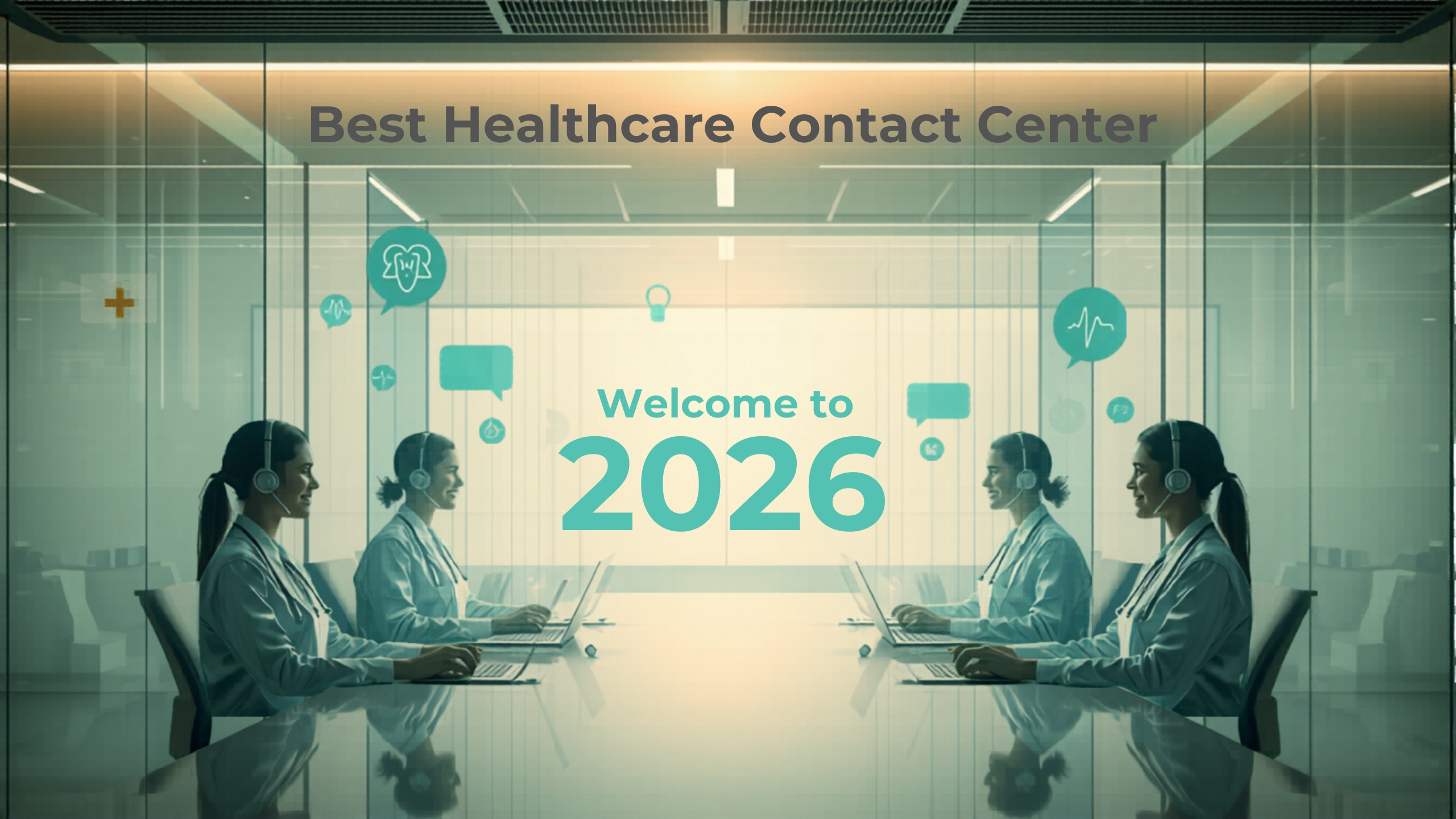
A Healthcare Contact Center is not simply a larger version of a traditional call center. The distinction is operational, regulatory, and patient-centric—not merely technological. Organizations that treat patient communication as a basic administrative function often experience lower patient satisfaction, higher operational costs, and increased compliance risks.
When healthcare leaders underestimate the role of a Healthcare Contact Center, hospitals, physician groups, and outpatient facilities face missed appointments, overwhelmed clinical staff, delayed responses, and fragmented patient experiences. These challenges directly affect revenue, care coordination, and organizational reputation.
What Is a Healthcare Contact Center?
A Healthcare Contact Center is a centralized communication hub that manages patient interactions across multiple channels while supporting clinical and administrative workflows. Unlike traditional phone support, modern healthcare organizations integrate voice, email, SMS, live chat, patient portals, and digital self-service into a unified communication ecosystem.
Today’s Healthcare Contact Center Services extend beyond answering calls. They streamline patient access, improve scheduling accuracy, facilitate care coordination, and ensure every interaction complies with HIPAA regulations.
Typical responsibilities include:
- Appointment scheduling and rescheduling
- Insurance verification support
- Patient registration assistance
- Referral management
- Prescription refill requests
- Billing inquiry assistance
- Care coordination communication
- Post-discharge follow-ups
- Patient satisfaction surveys
- Omnichannel patient support
As healthcare systems continue expanding, Healthcare Contact Center Solutions enable providers to deliver consistent patient experiences regardless of location or communication channel.
Why Healthcare Contact Centers Matter in 2026
Healthcare organizations face increasing pressure to improve patient outcomes while controlling operational costs. At the same time, patients expect the same level of responsiveness they receive from retail, banking, and other service-driven industries.
A modern Healthcare Contact Center addresses these expectations by centralizing patient communication and reducing administrative burden on clinical teams.
Key Business Benefits
Improved Patient Experience
Patients receive faster responses, reduced wait times, and consistent communication across every touchpoint. This significantly improves patient satisfaction and loyalty.
Increased Operational Efficiency
Administrative tasks are routed to trained specialists, allowing physicians and clinical staff to dedicate more time to patient care.
Better Appointment Management
Automated reminders, confirmations, and rescheduling reduce appointment no-shows while improving provider utilization.
Stronger HIPAA Compliance
Standardized workflows, secure communication channels, and documented processes help organizations protect sensitive patient information.
Enhanced Care Coordination
Healthcare providers can communicate more effectively with patients before, during, and after treatment, reducing care gaps.
Cost Optimization
Healthcare Contact Center Outsourcing enables organizations to scale patient support without making substantial investments in internal infrastructure.
Essential Features of Modern Healthcare Contact Center Solutions
Not every communication platform delivers the capabilities healthcare organizations require. Decision-makers should evaluate Healthcare Contact Center Solutions based on their ability to improve patient engagement, operational performance, and regulatory compliance.
| Feature | Business Value |
|---|---|
| Omnichannel patient communication | Provides consistent experiences across phone, email, SMS, chat, and patient portals |
| Intelligent call routing | Connects patients with the appropriate department quickly |
| HIPAA-compliant security | Protects patient health information and reduces compliance risks |
| Appointment scheduling | Improves provider utilization and minimizes no-show rates |
| CRM and EHR integration | Creates a unified patient communication history |
| Real-time analytics | Measures service quality and operational performance |
| AI-assisted self-service | Handles routine inquiries while reducing staff workload |
| Workforce management | Optimizes staffing based on patient demand |
| Quality monitoring | Improves communication standards through continuous evaluation |
| Multilingual patient support | Expands access for diverse patient populations |
Organizations investing in Healthcare Contact Center Provider partnerships should prioritize platforms that integrate seamlessly with existing healthcare technologies while supporting future digital transformation initiatives.
How Healthcare Contact Center Services Improve Patient Engagement
Patient engagement begins long before a clinical visit and continues after treatment. Every interaction shapes patient trust, satisfaction, and long-term loyalty.
Healthcare Contact Center Services support engagement throughout the patient journey by ensuring timely, accurate, and personalized communication.
Before the Appointment
- Appointment scheduling
- Insurance eligibility verification
- Digital reminders
- Patient registration assistance
- Pre-visit instructions
During Care
- Department coordination
- Clinical communication support
- Family updates
- Referral management
- Specialist scheduling
After Treatment
- Follow-up outreach
- Medication reminders
- Patient satisfaction surveys
- Care plan reinforcement
- Preventive care scheduling
This continuous communication model strengthens patient relationships while helping healthcare organizations improve retention and reduce avoidable administrative inefficiencies.
Healthcare Contact Center vs Traditional Call Center
Although the terms are often used interchangeably, their capabilities differ significantly.
| Healthcare Contact Center | Traditional Call Center |
|---|---|
| Supports omnichannel communication | Primarily voice-based support |
| Designed for healthcare workflows | General customer service functions |
| HIPAA-compliant communication | Limited healthcare compliance features |
| Integrates with EHR and CRM systems | Minimal healthcare system integration |
| Supports patient engagement strategies | Focuses mainly on issue resolution |
| Provides analytics for healthcare KPIs | Tracks basic call metrics |
| Enables proactive patient outreach | Mostly reactive communication |
| Scales across multiple healthcare facilities | Typically supports individual departments |
As healthcare organizations continue embracing digital transformation, Healthcare Contact Center Solutions have become strategic assets rather than administrative support functions.
What to Look for in the Right Service Partner
Selecting the right business partner should be based on long-term value rather than short-term cost. Look for an organization with a proven track record backed by measurable client outcomes, demonstrating consistent performance across projects and changing business conditions. Additionally, evaluate whether the partner can scale its resources, technology, and expertise as your organization grows without disrupting service quality. Transparent pricing is equally important because predictable costs support accurate budgeting and reduce financial surprises over the life of the engagement. Finally, choose a provider that offers dedicated support with clearly defined ownership, governance, and accountability so issues are resolved efficiently and strategic goals remain aligned. If you’re evaluating experienced business partners that meet these standards, Worldwide Call Center can help you explore solutions tailored to your organization’s growth objectives.
Evaluation Checklist
Before selecting a Healthcare Contact Center Provider, use this checklist to make an informed purchasing decision.
- HIPAA Compliance – Verify that the provider follows HIPAA regulations with documented security policies and regular compliance audits.
- Healthcare Experience – Confirm experience supporting hospitals, physician groups, specialty clinics, or health systems.
- Technology Integration – Ensure compatibility with your existing EHR, CRM, scheduling, and patient management systems.
- Omnichannel Capabilities – Look for voice, SMS, email, web chat, and patient portal communication within one platform.
- Performance Reporting – Request real-time dashboards, KPI reporting, and quality assurance metrics.
- Scalability – Confirm the ability to support seasonal demand, organizational expansion, and multi-location operations.
- Business Continuity – Ask about disaster recovery plans, redundant infrastructure, and uptime guarantees.
- Implementation Support – Understand onboarding timelines, staff training, and ongoing optimization services before signing a contract.
Mistakes to Avoid
Choosing Price Over Healthcare Expertise
Selecting the lowest-cost provider often leads to inadequate compliance processes, inconsistent patient experiences, and higher long-term operational expenses. Healthcare communication requires specialized knowledge that extends beyond standard customer service.
Ignoring Integration Requirements
A Healthcare Contact Center that cannot integrate with EHR, CRM, or scheduling systems creates duplicate work and increases administrative inefficiencies. Seamless integration improves both staff productivity and patient experience.
Overlooking Compliance and Security
Failing to evaluate HIPAA compliance, encryption standards, and access controls exposes healthcare organizations to regulatory penalties and reputational damage. Security should remain a primary evaluation criterion.
Focusing Only on Call Volume Metrics
Modern patient communication involves multiple digital channels. Measuring success only by call volume ignores patient satisfaction, first-contact resolution, appointment completion, and care coordination outcomes.
Not Planning for Future Growth
Healthcare organizations evolve rapidly through expansion, acquisitions, and new service lines. Choosing a provider without scalable infrastructure can result in costly migrations and operational disruptions.
Frequently Asked Questions
Q: What is a Healthcare Contact Center?
A: A Healthcare Contact Center is a centralized communication platform that manages patient interactions across voice, email, SMS, chat, and other digital channels. It supports appointment scheduling, patient inquiries, referrals, billing assistance, and care coordination while maintaining HIPAA compliance. Modern platforms also integrate with healthcare systems to improve operational efficiency and patient experience.
Q: How does a Healthcare Contact Center improve patient satisfaction?
A: Faster response times, personalized communication, appointment reminders, and consistent support across multiple channels create a smoother patient journey. Patients receive timely information before, during, and after treatment, reducing frustration and improving trust in the healthcare organization. Better communication also contributes to higher retention rates and positive patient reviews.
Q: What features should Healthcare Contact Center Services include?
A: Essential features include HIPAA-compliant communication, omnichannel support, intelligent routing, appointment scheduling, CRM and EHR integration, analytics, workforce management, multilingual support, and AI-assisted self-service. These capabilities help healthcare organizations improve patient engagement while reducing administrative workload.
Q: How do Healthcare Contact Center Solutions reduce operational costs?
A: By automating routine tasks, optimizing staff utilization, reducing appointment no-shows, and improving first-contact resolution, Healthcare Contact Center Solutions lower administrative expenses. They also enable healthcare organizations to scale efficiently without significantly increasing internal staffing costs.
Q: How do I choose the best Healthcare Contact Center Provider for my hospital?
A: Start by evaluating healthcare-specific experience, HIPAA compliance, technology integrations, scalability, reporting capabilities, and implementation support. Request client references, measurable performance metrics, and a clear service-level agreement before making a final decision. The right partner should align with both your operational goals and long-term growth strategy.
Conclusion
A Healthcare Contact Center is no longer a support function—it is a strategic investment that directly influences patient satisfaction, operational efficiency, compliance, and financial performance. Healthcare organizations that modernize patient communication are better positioned to reduce administrative burdens, improve care coordination, and deliver exceptional patient experiences in 2026 and beyond.
For guidance on HIPAA privacy and security requirements, review the official U.S. Department of Health & Human Services HIPAA guidance.
If you’re evaluating scalable Healthcare Contact Center Services that align with your operational goals, contact Worldwide Call Center to discuss a customized communication strategy for your healthcare organization.