


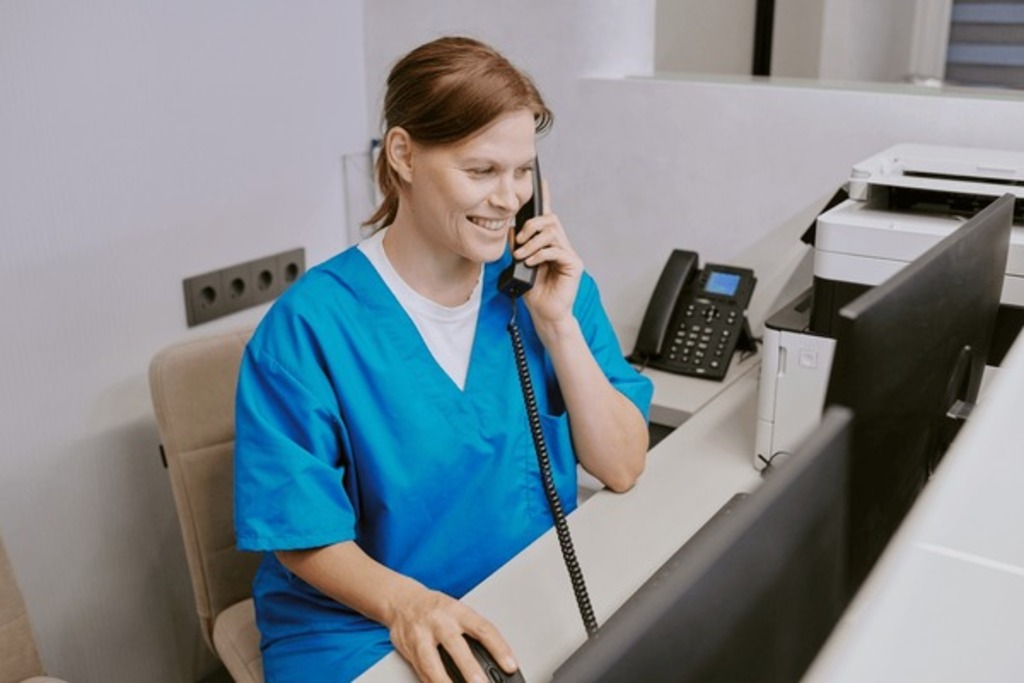
Hospitals and large healthcare organisations manage thousands of patient interactions across departments, facilities and communication channels. From appointment enquiries and admission-related questions to after-hours calls and requests for medical staff, every interaction requires an organised response.
As patient communication volumes increase, relying entirely on internal teams can create operational pressure. Missed calls, delayed messages and inconsistent call routing can affect patient experience and place additional demands on administrative staff.
Medical answering services help hospitals manage incoming patient calls, coordinate messages and direct enquiries to the appropriate departments. With structured workflows, trained representatives and clearly defined escalation procedures, these services can support large healthcare operations without requiring every communication task to be handled internally.
For hospital groups, healthcare networks and enterprise healthcare providers, the right answering service can become an important part of a broader patient communication strategy.
What Are Medical Answering Services?
Medical answering services are specialised communication solutions designed to manage incoming calls for healthcare organisations. They support patient communication by answering calls, recording messages, routing enquiries and coordinating approved administrative requests.
Unlike general business answering services, medical answering operations must account for healthcare communication requirements, patient confidentiality and appropriate escalation procedures.
Depending on the agreed service scope, medical answering services can include:
- Inbound patient call management.
- Hospital department call routing.
- After-hours and weekend call handling.
- Message recording and forwarding.
- Appointment-related communication.
- On-call staff notification.
- Administrative enquiry management.
- Patient callback coordination.
These services do not replace doctors, nurses or qualified healthcare professionals. Representatives must operate within approved responsibilities and escalate clinical questions to authorised personnel.
6 Ways Medical Answering Services Improve Hospital Communication
1. Manage High-Volume Patient Calls More Efficiently
Large hospitals receive calls from patients, family members, visitors, healthcare professionals and other stakeholders. These interactions may involve appointments, admissions, department enquiries, billing and general hospital information.
During peak periods, managing every incoming call internally can become challenging.
Medical answering services provide additional call-handling capacity to help hospitals manage incoming communication more systematically.
Key operational benefits include:
- Handling increased incoming call volumes.
- Reducing pressure on internal communication teams.
- Directing enquiries to the appropriate departments.
- Managing routine administrative questions.
- Improving the organisation of incoming patient requests.
For example, a hospital receiving a high volume of appointment and admission enquiries can use an outsourced support team to manage approved calls and route specialised requests to the relevant departments.
A clearly defined call-handling process helps reduce unnecessary transfers and gives patients a more organised communication experience.
2. Extend Patient Communication Beyond Hospital Operating Hours
Hospital communication requirements continue outside regular administrative working hours. Patients and their families may need to leave messages, request information or reach an authorised on-call contact during evenings, weekends and holidays.
Maintaining additional internal staffing for every communication requirement can increase operational complexity.
Depending on the agreed coverage model, medical answering services can provide extended or 24/7 call-handling support.
This can help hospitals:
- Receive patient calls outside standard administrative hours.
- Record messages for the appropriate departments.
- Notify designated on-call personnel.
- Route requests according to approved procedures.
- Maintain communication continuity during holidays.
For example, a patient calling a hospital after administrative hours may need to communicate an appointment-related request. The answering representative can record the information and forward it to the designated team.
Hospitals should establish clear escalation rules for urgent calls and define which requests can be handled during the next business day.
3. Improve Department-Wise Call Routing and Coordination
Large healthcare organisations often operate multiple departments, specialised units and administrative divisions. Patients may not always know which department they need to contact.
Unstructured call transfers can result in repeated explanations, unnecessary waiting and additional work for internal teams.
Medical answering services can follow predefined routing procedures to direct calls to the appropriate department or authorised contact.
These workflows may support:
- Appointment and scheduling departments.
- Patient registration and admissions.
- Billing and financial services.
- Medical records departments.
- Insurance and administrative support teams.
- Designated on-call healthcare professionals.
For hospital groups operating across multiple facilities, standardised routing procedures can also help maintain consistency between locations.
The hospital should provide updated department directories, contact information, transfer instructions and escalation rules. These procedures should be reviewed regularly to account for operational changes.
4. Support Appointment Management and Patient Follow-Ups
Appointment communication is an important part of hospital administration. Patients may need to request consultations, confirm scheduled visits, reschedule appointments or receive reminders.
When internal teams handle every interaction, appointment-related calls can compete with other administrative responsibilities.
Depending on the authorised service scope and technology access, medical answering teams can assist with:
- Recording new appointment requests.
- Confirming approved appointment information.
- Forwarding rescheduling and cancellation requests.
- Coordinating appointment reminders.
- Managing patient callback requests.
- Routing scheduling enquiries to the relevant department.
For example, a hospital receiving appointment requests across multiple departments can use structured answering workflows to collect patient details and forward requests to the appropriate scheduling teams.
Where authorised system access is available, representatives may also support specific booking activities. The hospital must define access permissions and responsibilities before allowing external teams to modify appointment records.
For further information, explore our guide to healthcare appointment scheduling and patient communication.
5. Reduce Administrative Pressure on Internal Healthcare Teams
Hospital administrative departments manage a wide range of responsibilities, including patient communication, admissions coordination, appointment enquiries and internal message handling.
When incoming calls interrupt these activities throughout the day, employees may struggle to maintain consistent workflows.
Medical answering services can distribute selected communication responsibilities to an external team.
Potential operational advantages include:
- Additional support during peak calling periods.
- Reduced pressure on internal administrative employees.
- More organised message management.
- Better coordination of callback requests.
- Greater capacity for internal teams to focus on specialised responsibilities.
For example, a hospital’s central reception team may receive calls from several departments simultaneously. An outsourced answering team can manage approved enquiries and forward messages according to the hospital’s established procedures.
The objective is to complement internal operations, not replace essential hospital personnel.
6. Standardise Communication Across Multiple Hospital Locations
Healthcare networks and hospital groups may operate multiple facilities with different departments, operating schedules and administrative processes.
Without standardised communication procedures, patients may receive inconsistent information depending on the location or department they contact.
A structured medical answering service can help establish consistent call-handling practices across participating facilities.
This may include:
- Standardised call greetings and scripts.
- Location-specific call routing.
- Consistent patient verification procedures.
- Centralised message management.
- Defined escalation responsibilities.
- Performance monitoring across locations.
For enterprise healthcare organisations, these processes can support better coordination and visibility across communication operations.
However, successful implementation requires accurate location directories, approved communication scripts, clear reporting responsibilities and regular quality reviews.
Medical Answering Services vs. Enterprise Healthcare Call Center Outsourcing
Medical answering services and broader healthcare call center outsourcing are related, but they do not necessarily cover the same operational responsibilities.
| Area | Medical answering services | Healthcare call center outsourcing |
|---|---|---|
| Primary focus | Incoming calls, messages and call routing | Broader patient communication operations |
| Call management | Answering and forwarding calls | Inbound and outbound interactions |
| Appointment support | Basic requests and coordination | More extensive scheduling and follow-ups |
| Department coordination | Message routing and escalation | Broader communication workflows |
| Operational scope | Defined answering responsibilities | Multiple administrative and support functions |
| Enterprise application | Specific call-handling requirements | Larger outsourced communication operations |
Hospitals should select the model according to their operational requirements. Organisations managing high-volume patient interactions across several departments may benefit from a broader healthcare contact centre arrangement rather than a standalone answering service.
Explore Worldwide Call Center’s healthcare outsourcing services to understand its published service areas.
HIPAA and Patient Data Security: What Hospital Management Should Evaluate
Medical answering operations may involve sensitive patient information, including identifying details, appointment information and messages intended for healthcare professionals.
For US healthcare organisations subject to HIPAA, privacy and security requirements must be considered when outsourcing activities involving protected health information (PHI).
The US Department of Health and Human Services explains that certain external service providers handling PHI on behalf of covered entities may qualify as business associates. Depending on the relationship, an appropriate written agreement may be required.
Hospital management should review the official HHS guidance on Business Associate Agreements before engaging an external service provider.
Important areas to evaluate include:
- Business Associate Agreement: Determine whether the relationship requires a BAA and clearly document permitted activities and responsibilities.
- Access management: Ensure representatives can access only the patient information necessary for their assigned responsibilities.
- Identity verification: Establish procedures for verifying callers before sharing protected information.
- Staff training: Review privacy, confidentiality and healthcare communication training.
- Secure technology: Understand how patient information and call records are accessed, transmitted and stored.
- Incident management: Confirm how suspected privacy or security incidents are reported and addressed.
Hospitals should also understand the HIPAA Minimum Necessary Standard. The HHS Minimum Necessary Requirement explains the importance of limiting the use, disclosure and requests for protected health information to what is reasonably necessary for the intended purpose, subject to applicable exceptions.
An outsourcing provider should not be considered HIPAA-compliant simply because it offers healthcare answering services. Hospital management must evaluate applicable agreements, safeguards, staff responsibilities and operating procedures.
How to Select the Right Medical Answering Services Partner
Choosing a medical answering services partner is an operational decision that can affect patient communication, internal workflows and information security.
For mid-market and enterprise healthcare organisations, the evaluation should go beyond basic call-answering capability.
Consider these six factors:
- Healthcare operations experience: Evaluate the provider’s experience handling healthcare communication requirements and structured patient support workflows.
- High-volume call-handling capability: Understand how the provider plans staffing, manages peak demand and maintains service continuity.
- Multi-department call routing: Check whether the provider can follow complex routing instructions across departments and locations.
- Privacy and security practices: Review applicable agreements, access controls, staff training and data-handling procedures.
- Technology compatibility: Discuss integration or operational compatibility with approved telephony, scheduling and communication systems.
- Performance reporting: Establish measurable service expectations, including response time, call abandonment, message accuracy, escalation handling and quality scores.
A structured onboarding programme is equally important. It should cover approved scripts, department directories, access permissions, escalation contacts, reporting requirements and quality monitoring procedures.
Hospitals should also establish service-level agreements (SLAs) that define performance expectations, reporting frequency, responsibilities and issue-resolution processes.
Why Consider Worldwide Call Center for Healthcare Communication Support?
Healthcare organisations need communication support that reflects the scale, sensitivity and operational complexity of patient interactions.
Worldwide Call Center provides healthcare-focused call center and customer support outsourcing solutions. Its published healthcare service areas include inbound and outbound patient interactions, appointment management, insurance verification, medical answering services and care coordination.
The company also lists healthcare administrative capabilities such as insurance eligibility verification, prior authorisation processing, accounts receivable management and denial management.
Hospital groups and healthcare organisations can explore Worldwide Call Center’s healthcare call center services to understand the published capabilities.
Before starting an engagement, healthcare decision-makers should discuss expected call volumes, coverage requirements, departmental workflows, technology needs, privacy safeguards and performance expectations.
The final outsourcing arrangement should be based on confirmed service capabilities and the organisation’s operational requirements.
Frequently Asked Questions
1. What are medical answering services for hospitals?
Medical answering services help hospitals manage incoming patient calls, record messages, route enquiries and coordinate approved administrative requests. Depending on the agreement, they can also support after-hours and weekend communication.
2. Can medical answering services support large hospital networks?
Yes. Depending on the provider’s capabilities, answering services can be structured to support multiple departments and locations. Hospital networks should evaluate staffing capacity, call routing, reporting, technology compatibility and service continuity before selecting a provider.
3. Can outsourced medical answering teams manage high-volume patient calls?
They can provide additional call-handling capacity when staffing, workflows and technology are designed around the expected demand. Hospitals should evaluate historical call volumes, peak periods, response expectations and escalation requirements.
4. Are medical answering services HIPAA-compliant?
They can be structured to meet applicable HIPAA requirements when the provider’s role, contractual agreements, safeguards and operating procedures address the relevant obligations. Healthcare organisations should determine whether a Business Associate Agreement is required and evaluate the provider’s privacy and security practices.
5. What is the difference between medical answering services and healthcare call center outsourcing?
Medical answering services primarily focus on incoming calls, message management and call routing. Healthcare call center outsourcing can cover a broader range of operations, including patient support, appointment coordination, insurance-related enquiries, outbound communication and administrative follow-ups.
Conclusion
Large healthcare organisations need reliable communication processes to manage patient enquiries, department-level calls, after-hours requests and administrative follow-ups.
Medical answering services can help hospitals organise incoming calls, improve message management, support extended communication coverage and distribute routine administrative responsibilities. For hospital groups and healthcare networks, structured call-handling workflows can also support more consistent communication across multiple locations.
However, successful outsourcing depends on choosing the right service partner, defining clear responsibilities, protecting patient information and monitoring operational performance.
Worldwide Call Center offers healthcare communication and outsourcing capabilities that healthcare organisations can explore according to their requirements.
Looking to strengthen your hospital’s patient communication operations? Contact Worldwide Call Center to discuss your communication requirements and explore a suitable outsourcing arrangement.